
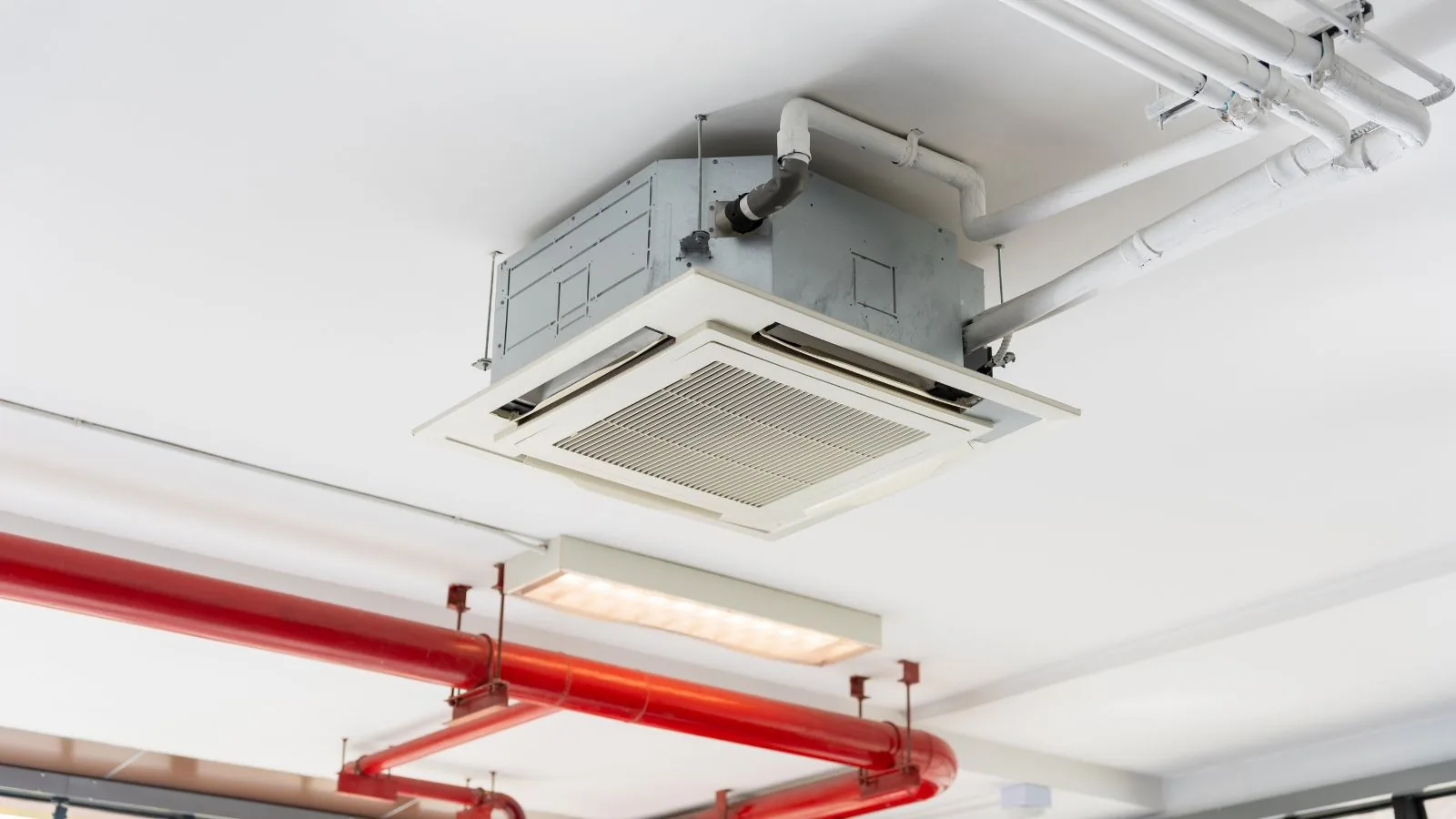
An air conditioner or furnace with a coil makes water every time it runs. That water leaves through a condensate drain, and when the drain clogs or the pan cracks, the water goes somewhere else. It might soak a closet carpet, stain a ceiling or sit unseen in an attic for weeks. This page is about drying the damage that results, not repairing the HVAC system.
If you see water, switch the system off at the thermostat. Wipe up what you can, put a towel or bucket under a drip and photograph the area. An HVAC technician fixes the drain or pan, and our crew dries the structure so the damage does not keep growing.
How AC condensate leaks happen
- The condensate line clogs with algae or debris and backs up into the pan.
- The pan rusts or cracks under an attic or closet unit.
- A float switch fails, so the system keeps running while the drain is blocked.
- A loose connection drips inside a wall or soffit.
Condensate water is often called Category 1 when it is fresh, but it can pick up growth from the pan and drain, so it is treated with care. Water that has been sitting for days or weeks can reach the drywall, insulation and framing around the unit.
Symptoms you may notice
Common signs include a stain on a ceiling under an attic unit, a damp smell in a hall closet, peeling paint near a wall furnace or a musty odor that returns when the system runs. Hardwood near an air handler can cup where a drain line leaks. If you see mold-like growth at the closet base, read about mold remediation before cleaning it yourself.
| Where the unit sits | Typical damage | What the crew checks |
|---|---|---|
| Attic | Ceiling stains and wet insulation | Moisture above the ceiling and in framing |
| Hall or closet air handler | Carpet and wall base dampness | Pad, baseboard and wall bottom readings |
| Garage or utility room | Slab and wall base wetness | Drywall base and stored items |
| Wall-mounted or ceiling cassette unit | Streaks on the wall or ceiling | Cavity behind the unit |
AC leaking onto your ceiling or closet floor? Call the 24/7 line and describe where it is.
☎ Call (833) 521-1033Drying after an AC leak
Crews measure first, then remove only what cannot dry in place. Wet insulation is often removed, and drywall near the leak may be cut back. Air movers and dehumidifiers dry the remaining material, and moisture logs record when readings are met. For ceiling damage, the repair step is covered in ceiling water damage repair.
The cycle matters here. A condensate leak returns every time the system runs, so drying only works after the drain is cleared. Ask the HVAC technician to confirm the fix before the final drying readings are taken.
Millbrae homes and cooling
Published climate summaries describe mild Millbrae summers, with highs in the low 70s Fahrenheit and frequent morning fog. Many homes have heating more than cooling, so an air handler or furnace coil may run mainly in winter and spring, and a clogged drain can go unnoticed. Condo and apartment buildings around the station area often put air handlers in closets, which is where leaks get found late.
What affects AC leak water damage cost
The leak itself is small. How long it ran sets the price.
- Duration
- Weeks of dripping soak more material than one day.
- Location
- Attic, closet and ceiling each need a different approach.
- Materials
- Insulation, drywall and carpet react differently.
- Drying days
- A thick, wet assembly takes more days than a thin one.
- Repairs after drying
- Paint, board and flooring are rebuild work.
For an AC leak, the scope and price are described before work starts. Call (833) 521-1033
Insurance and AC leaks
Sudden and accidental water discharge from an HVAC system is sometimes covered, while long-term leakage and lack of maintenance often are not. Ask your insurer and keep records of the repair and drying.
Service area
We take calls for Millbrae, Burlingame, San Bruno, San Mateo and South San Francisco, plus Belmont and San Carlos. Large wet areas may call for structural drying and dehumidification.
The standard behind this work
Industry practice for drying after clean condensate leaks follows ANSI/IICRC S500, which defines water categories and classes and ties drying to measured goals.
Safety checklist before the crew arrives
- Turn off the air handler at the thermostat and the breaker before touching it.
- Do not stand on a wet floor under a ceiling-mounted unit.
- Keep fans off any visible growth near the unit.
Questions we hear in Millbrae
Can an AC leak cause mold?
Moisture sitting in insulation, carpet or drywall can support mold growth, which is why drying quickly matters. The EPA advises drying wet materials within 24 to 48 hours.
Do you fix the AC unit?
No. An HVAC technician fixes the drain, pan or coil. We dry and restore what the water damaged.
Is the water from an AC unit dangerous?
Fresh condensate is relatively clean, but standing water can pick up growth from the pan and drain. Treat it with care and ask us about it.
How do I know if the closet carpet is wet underneath?
Pressing a dry paper towel on carpet can show surface moisture, but only a moisture meter shows what the pad and subfloor hold.
Will insurance cover AC leak damage?
It depends on the cause and the policy. Sudden events are often treated differently from long-term leaks. Ask your insurer.