
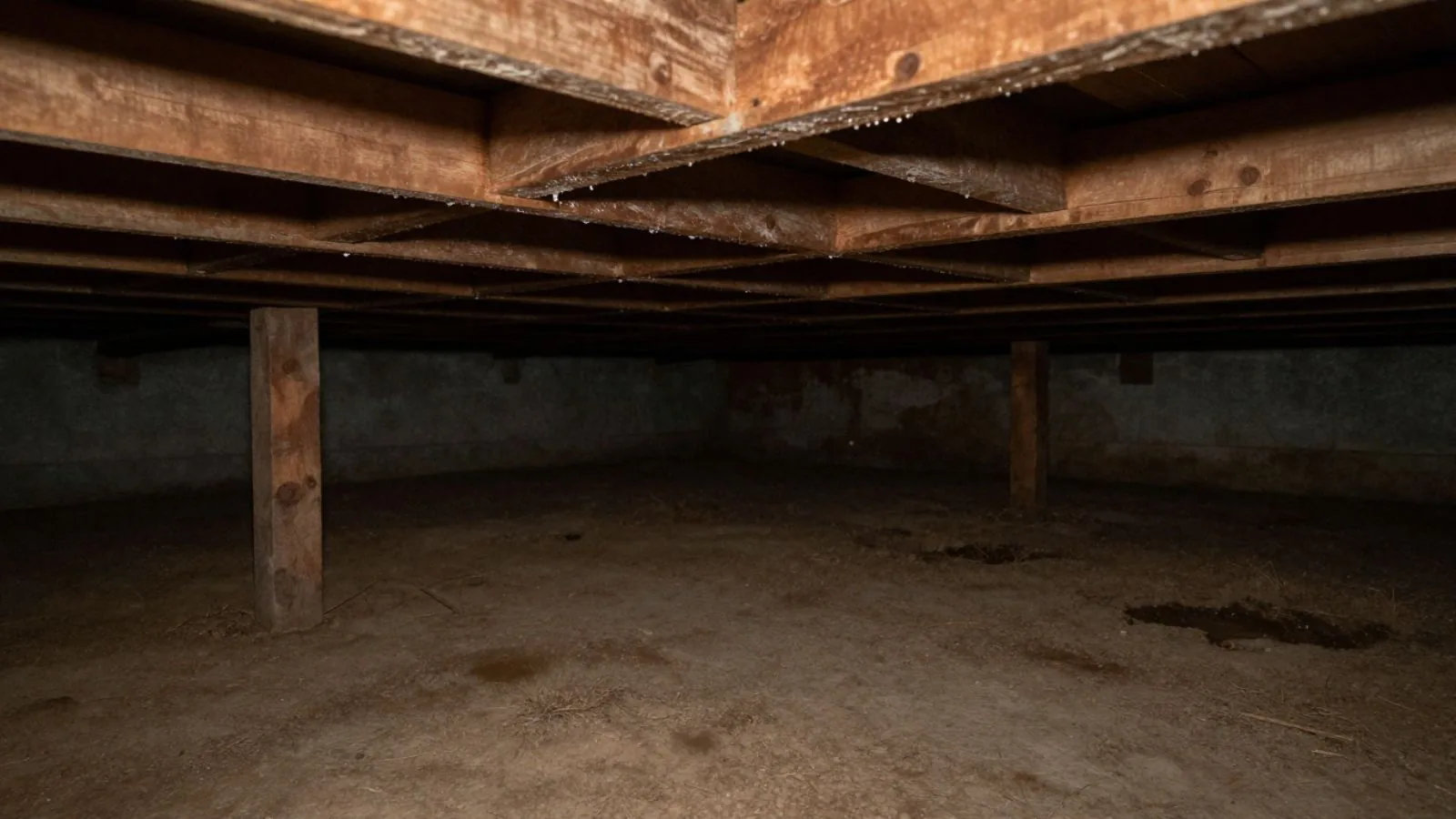
A crawl space is the shallow void between the ground and the floor of a house. When water gets in, it soaks insulation, sits against wood joists and keeps the underside of the floor damp, often for weeks before anyone looks. The signs show up upstairs first, as cold floors, a musty smell or flooring that cups.
If you can safely see inside, take photos from the access hatch and do not crawl into standing water. The space can contain wiring, ducts and pests, and wet insulation can be heavy. Call, describe what you see, and a crew will explain what a proper inspection includes.
Water under the house: what is going on
Crawl space water usually comes from one of four places. Groundwater or runoff can enter through vents and foundation gaps after rain. A leaking supply or drain line can drip for weeks. An HVAC duct can condense. Or a downspout can discharge too close to the foundation.
Whatever the source, the result is the same. Insulation sags, the vapor barrier collects water on top of it, joists pick up moisture, and humidity rises in a space that has little airflow. That is where mold tends to start, so measurement matters.
| What the crew finds | What it can mean | Typical response |
|---|---|---|
| Standing water on the ground | Runoff, a leak or a plumbing failure | Pump out, find the source with the plumber or a drainage contractor |
| Wet, sagging insulation | Water from above or high humidity | Remove wet insulation, dry framing |
| Damp joists and subfloor | Long-term moisture | Moisture readings, drying and mold check |
| Torn or pooled vapor barrier | Barrier lifted by water | Reset or replace after drying |
Crawl space wet? Call the 24/7 line and describe what you can see from the hatch.
☎ Call (833) 521-1033How a crawl space is dried
Equipment has to be sized for a low, tight space. Crews use submersible pumps for standing water, remove wet insulation, and set air movers and dehumidifiers with ducting where needed. Moisture meters check joists and subfloor on a schedule until they reach the drying goal.
The finished floor above also matters. Water that rose or dripped up into flooring is handled under hardwood floor water damage repair or carpet water damage restoration, and long-term moisture may point to mold remediation.
Millbrae and crawl spaces
We have no local source that says how many Millbrae homes have crawl spaces, so this page is about mechanism. Homes on hillside lots, older homes and additions are the kind that commonly have them, but that is true of the Peninsula in general. Rain is the main outside driver. Published climate summaries put rainfall near 20 inches in the lowlands and up to 32 inches in the hills, falling mostly November through April.
Millbrae city water comes through the regional San Francisco system, so a wet crawl space after a dry week points toward plumbing rather than rain. Ask a plumber to check supply and drain lines before blaming the weather.
What we do not do
We clean up and dry the space. We do not install drainage systems, encapsulation or sump pumps, and we do not rent equipment. If runoff is the cause, a drainage or foundation contractor is the right next call, and a good one will not skip a moisture check afterward.
What affects crawl space water damage cleanup
Access and moisture level make most of the difference.
- Access
- A tall, open space is easier than a tight one.
- Water source
- A single plumbing leak differs from recurring runoff.
- Insulation and barrier
- Wet insulation is removed and barriers may need replacement.
- Drying days
- Low airflow means longer drying.
- Follow-up work
- Mold checks and floor repairs are separate scopes.
Crawl space work is scoped and priced before anyone goes under the house. Call (833) 521-1033
Insurance and crawl space water
Sudden plumbing leaks are often covered, while groundwater and flood are usually excluded and need separate coverage. Photographs from the hatch and moisture readings help document the loss. Ask your insurer how your policy applies.
Service area
Crews work out of Millbrae and reach Burlingame, San Bruno, San Mateo and South San Francisco. Water that reached the rooms above may also fall under water extraction.
The standard behind this work
ANSI/IICRC S500 covers structural drying below the living space, and the EPA advises drying water-damaged materials within 24 to 48 hours to prevent mold.
Safety checklist before the crew arrives
- Do not enter a crawl space with standing water near wiring.
- Turn off power to the area only if you can reach the panel dry.
- Wear gloves and a mask if you must look, and keep children and pets out.
Questions we hear in Millbrae
Is it safe to go into a wet crawl space myself?
Usually not. Wet ground, wiring and low clearance create risks, and contaminated water adds more. Look from the hatch and take photos.
Can I leave the water until it dries?
It rarely dries on its own because airflow is poor and humidity stays high. Standing water and wet insulation keep the floor above damp.
Do you install drainage or sump pumps?
No. We clean up and dry. A drainage or foundation contractor handles water entry and sump systems.
How do I know if there is mold under the house?
Musty odor and dark growth on joists are signs, but only inspection and testing confirm it. Ask us about it.
Will insurance cover a wet crawl space?
Sudden plumbing leaks may be covered, while groundwater and flood often are not. Ask your insurer.