
Why is my house still damp after the water is gone?
Surfaces can look dry while wood, drywall and subfloor hold moisture inside. If you can smell damp, feel cool patches on walls or see paint bubbling days after a leak, there is still water in the structure. That is the problem structural drying solves.
Structural drying is the process of removing moisture from building materials after the visible water is gone. It follows extraction and leads into repair. The tools are moisture meters, thermal imaging, air movers and dehumidifiers, and the work is documented with readings.
Drying equipment and what it does
- Moisture meters measure how wet drywall, wood and concrete are.
- Thermal cameras show cool, wet areas behind surfaces.
- Air movers push air across wet surfaces to release moisture.
- Low-grain refrigerant dehumidifiers pull that moisture out of the air.
- Hygrometers track temperature and humidity in the space.
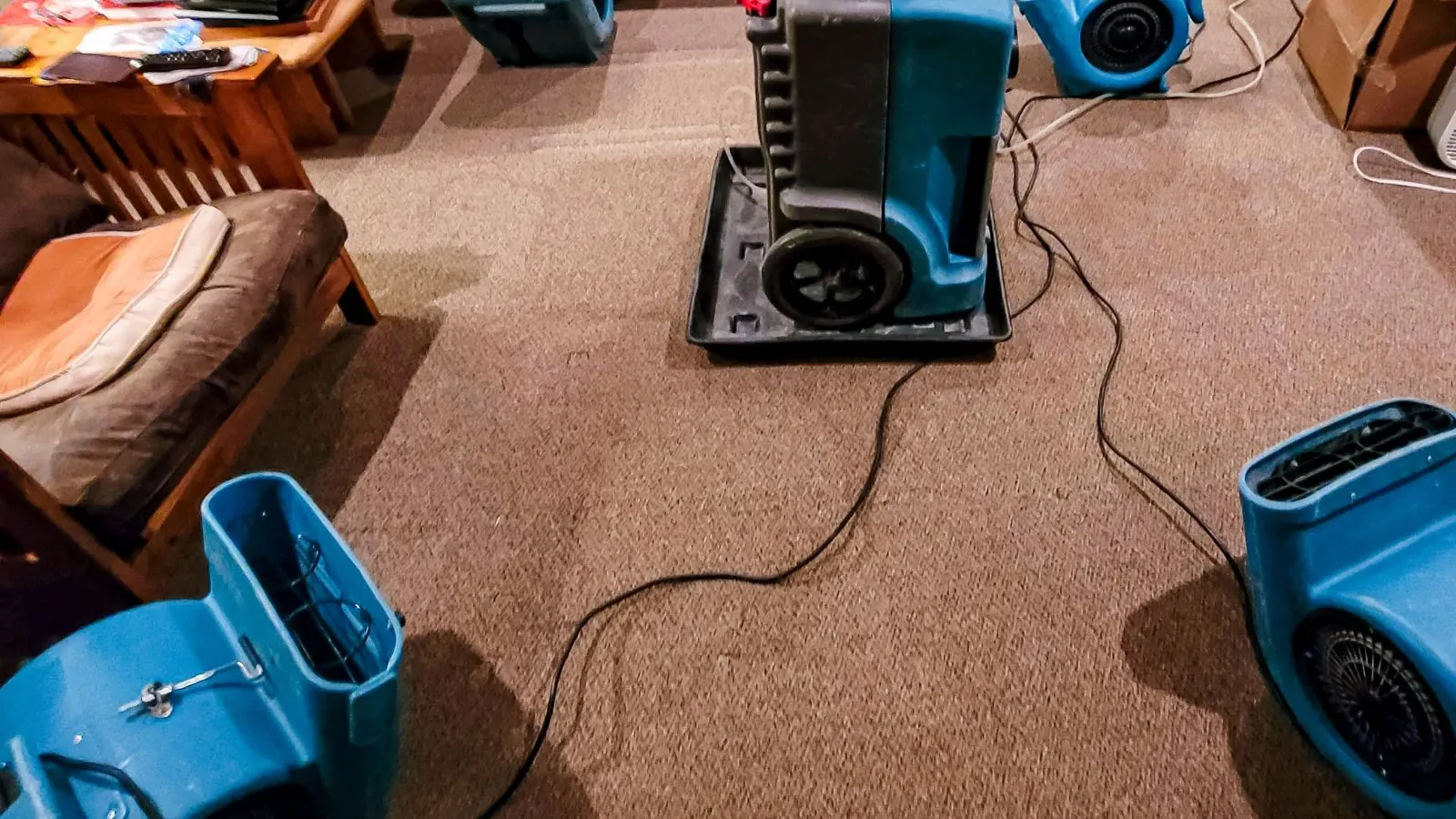
Equipment is placed by a plan, not scattered at random. Air movers aim along walls and under floors, and dehumidifiers run in closed rooms so they can remove the moisture the air movers release. The plan changes as readings change.
| Step | What happens | Why it matters |
|---|---|---|
| Moisture mapping | Meters and thermal imaging locate wet areas | Decides what is dried and what is removed |
| Equipment setup | Air movers and dehumidifiers are placed | Starts evaporation and removal |
| Daily readings | Technicians record moisture and humidity | Shows if drying is working |
| Drying goal confirmed | Readings match dry reference materials | Shows when equipment can leave |
Want your structure measured, not guessed? Call the 24/7 line and ask about moisture mapping.
☎ Call (833) 521-1033Water mitigation: the term behind this page
Water mitigation means the steps taken to stop damage from spreading, including stopping the source, removing water and drying. Structural drying is the longest part of it. You will hear the word on estimates and in policies, and the blog explains it in more depth.
A job that skips drying and goes straight to repairs risks trapped moisture, odor and mold behind new finishes. The EPA advises drying water-damaged areas and items within 24 to 48 hours to prevent mold growth, and starting early shortens the drying timeline.
How long drying takes
Most jobs take several days with equipment running, but the real answer depends on materials. Dense hardwood and concrete dry slowly, while thin drywall dries faster. Humidity matters too, and Millbrae mornings can be humid with fog. The crew adjusts and records readings until your structure meets the drying goal.
Millbrae buildings and drying
Millbrae has a mild climate with cool, wet winters, and the humidity along the Bay side can slow natural drying. Homes range from hillside houses to downtown condo buildings near the Millbrae station, and each has different air paths. In a condo, drying equipment may need to avoid shared walls and neighbors, so tell the property manager about the plan.
Drying equipment is used on the job and is not rented out. If you are weighing a do-it-yourself dehumidifier, ask for a moisture reading first. A small unit may not be enough for a wet wall or a flooded level.
What affects structural drying cost
Equipment count and days drive most of the cost.
- Water category
- Contaminated water adds removal before drying.
- Area and materials
- More square footage and dense materials need more equipment and time.
- Drying days
- Equipment leaves when the numbers match a dry reference.
- Access
- Hard-to-reach spaces need extra setup.
- Rebuild
- Repairs after drying are separate work.
Drying plans come with a stated scope and price before equipment is placed. Call (833) 521-1033
Insurance and drying records
Moisture logs, photos and equipment readings document that drying was done and finished. Coverage depends on the cause and your policy, so ask your insurer, and keep the logs with your claim file.
Service area
We dry homes and businesses in Millbrae, Burlingame, San Bruno, San Mateo, South San Francisco and Daly City, as well as Belmont and San Carlos. If mold has already appeared, see mold remediation, and for carpet specifics read carpet water damage restoration.
The standard behind this work
Everything on this page follows the principles of ANSI/IICRC S500, which defines drying goals, and the EPA 24 to 48 hour benchmark for preventing mold.
Safety checklist before the crew arrives
- Keep the area closed so equipment dries the structure instead of the whole house.
- Do not touch or unplug drying equipment between visits.
- Keep cords off wet floors and away from water.
Questions we hear in Millbrae
How do you know when my house is dry?
Technicians compare moisture readings against dry reference materials in your home and record daily readings until they match.
Can I just run fans and a dehumidifier?
For a small spill, maybe. For wet walls or a whole level, you need meters and the right equipment, and a moisture reading tells you if it is working.
Do you rent out air movers and dehumidifiers?
No. Equipment is used on the job and is not rented out.
Why does drying take days?
Water has to move out of dense materials slowly. Rushing can trap moisture and cause odor or mold.
Is the noise normal?
Yes. Air movers and dehumidifiers are loud, and your crew can explain how to live with them while they run.
My wall looks dry but smells musty. What now?
A musty smell can mean moisture is still inside the wall. A moisture reading will show whether drying is needed.