
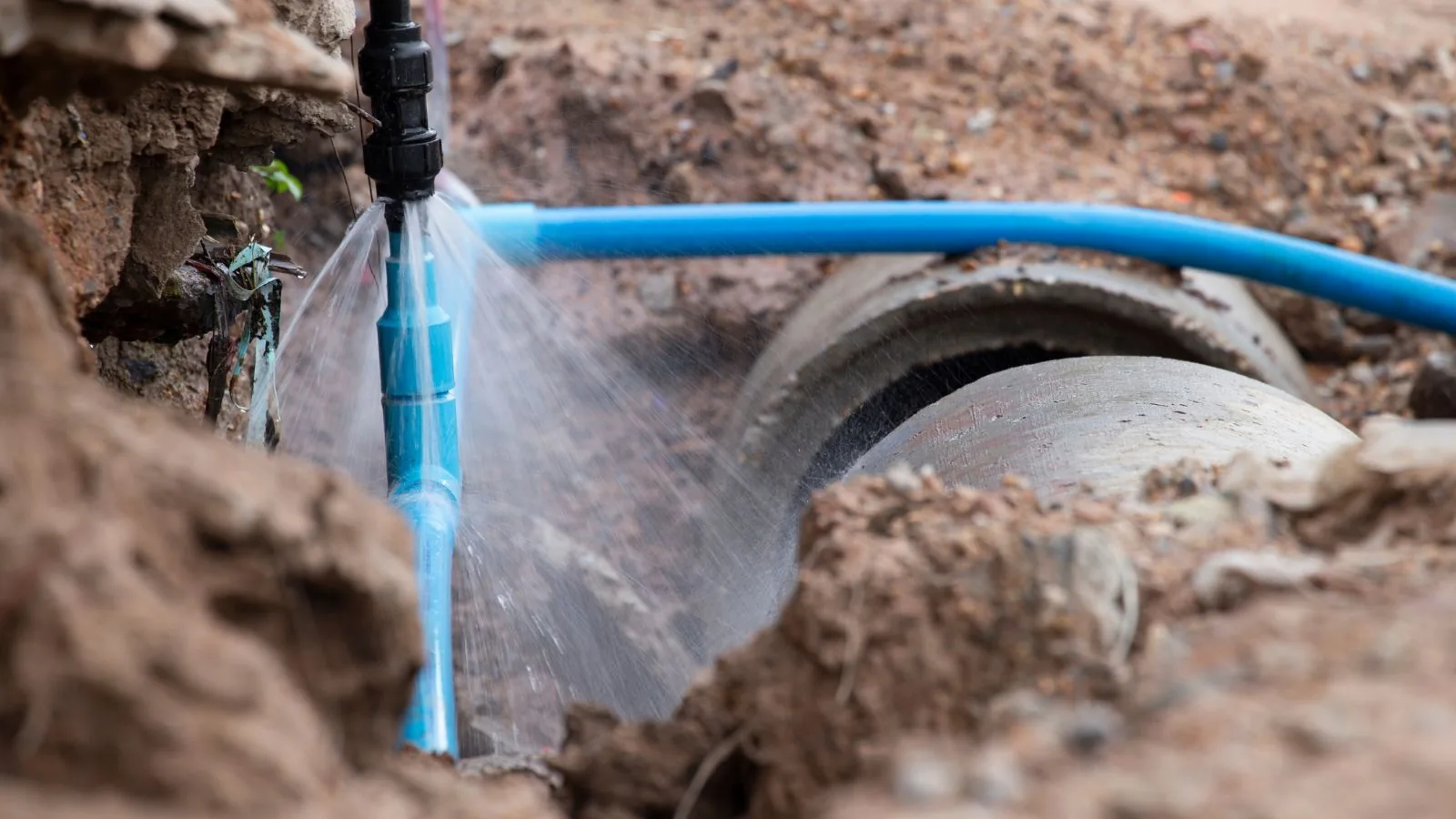
A burst pipe is an emergency because a pressurized line keeps pushing water until someone closes a valve. Our 24/7 line is open at any hour, and the first thing we ask is whether the main water valve is off. Find it, turn it clockwise or close the lever, and open a faucet at the lowest fixture in the house to drain what remains.
Once the flow stops, lift valuables off the floor, photograph the damage and keep people away from wet electrical equipment. Do not hunt for the break with the water still running. Close the valve first, because every minute of flow adds to the material that has to be dried or removed.
Burst pipe: what to do first
The order matters. Water off, power considered, photos taken, then a call. If water is dripping through a light fixture or ceiling, stay clear of that room and leave the breaker alone unless you can reach the panel while standing on a dry floor.
- Close the main water shut-off valve and drain a low faucet.
- If water touches outlets, lights or appliances, keep away and call the utility or 911 about the electrical risk.
- Move rugs, books and electronics off wet floors.
- Photograph the break, the wet areas and anything damaged.
- Call the 24/7 line and describe where the water went.
Where burst pipe water goes
Supply lines inside walls send water down through the cavity, out through baseboards and into the floor system below. A break in an upstairs bathroom can show up as a stain on the ceiling of the room under it. The visible wet spot is often a small part of the real footprint.
That is why a crew maps moisture with meters and thermal imaging before deciding what comes out. Wet drywall near the break is often cut back, while framing and subfloor are dried in place. The sequence after the water is out is covered in structural drying and dehumidification.
| Where the pipe broke | Typical path of the water | Common follow-up |
|---|---|---|
| Under a kitchen sink | Cabinet base, flooring and the wall behind | See kitchen water damage restoration for cabinets and under-sink damage |
| Inside a wall cavity | Down the stud bay and out at the baseboard | Drywall cut-out and cavity drying |
| Attic or upper floor | Through the ceiling below | See ceiling water damage repair for stains, sagging and collapse |
| Garage or utility room | Slab, stored items and adjoining walls | Extraction and contents check |
Pipe burst and the water is off? Call the 24/7 line and we will explain what the crew will measure first.
☎ Call (833) 521-1033What makes Millbrae homes different
Every Millbrae tap is fed by the San Francisco regional water system through the city utility, so water pressure at the meter is steady and a failed fitting keeps flowing until the valve is closed. The 2020 Census counted 8,679 housing units in Millbrae, and about 40 percent of households rent, which matters when a break happens in a multi-unit building and the shut-off sits in a shared space.
If you rent or live in a condo, tell the property manager right away and give the crew access to the building shut-off. A repair permit is a separate question from cleanup, and permit rules vary, so ask the City of Millbrae Building Division before any pipe replacement.
Repair or replace the pipe first
Cleanup and the plumbing repair are two jobs. Restoration removes water and dries the structure, while a licensed plumber fixes the break. In California, construction work at or above the state dollar threshold must be done by a licensed contractor, so check a license on the state board website before hiring anyone for the repair.
What affects burst pipe cleanup cost
The size of the loss drives the price far more than the pipe itself.
- Water category
- A clean supply line is Category 1, but water sitting for a day or more can move to Category 2.
- Affected area
- Count rooms and floors that took water, not just the room with the break.
- Materials
- Hardwood, carpet, drywall and insulation each need a different response.
- Drying days
- Equipment stays until readings reach the goal, so days depend on what got wet.
- Rebuild scope
- Drywall, flooring and paint after drying are priced as repair work.
For a burst line, the scope comes first and the price follows it, before work begins. Call (833) 521-1033
Insurance after a pipe bursts
A sudden break is the kind of event homeowners policies often cover, while slow or long-running leaks and neglect often are not. Do your own reasonable protection of the property, keep receipts, and ask your insurer what applies. Moisture logs and photos from the cleanup go into your claim file.
Where we respond
Calls come in from Millbrae, Burlingame, San Bruno, San Mateo, South San Francisco and the rest of the Peninsula. Cold snaps are rare here, so if your break came from ice, read about frozen pipe water damage instead.
The standard behind this work
The drying steps on this page follow ANSI/IICRC S500, the published standard for professional water damage restoration.
Questions we hear in Millbrae
Who do I call when a pipe bursts overnight?
The 24/7 line. If you are standing in water at 3 a.m., call, shut off the main valve, and we will explain what to do until a crew can be assigned.
Where is my main water shut-off?
It is usually where the line enters the house, in a garage, utility room or basement wall, or at the meter box near the street. In a condo or apartment it may be shared, so ask the building manager before an emergency.
Will you fix the pipe too?
Our work is cleanup and drying. The pipe itself is repaired by a licensed plumber, and we work around that repair so the structure can be dried.
How long before mold becomes a worry?
The EPA advises drying water-damaged areas and items within 24 to 48 hours to prevent mold growth, which is why a fast call matters.
Is water damage from a burst pipe covered by insurance?
Sudden and accidental breaks are often covered, but policies differ. Check your policy or ask your insurer, and keep photos and receipts.