
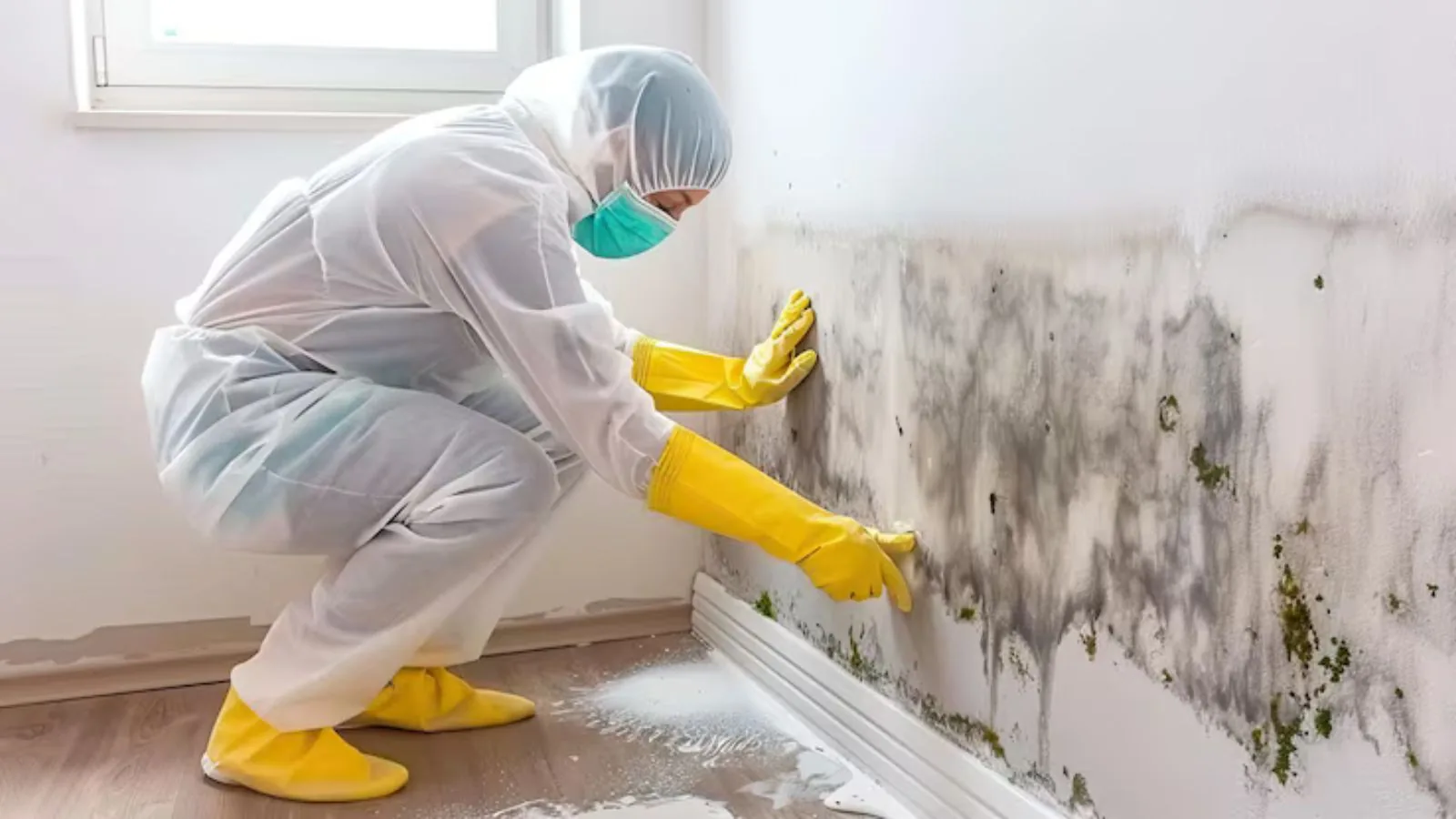
A basement or lower-level room is where mold shows up most often, because the air moves less and surfaces are cooler. Getting rid of it means three things. Find the moisture, dry it and control humidity afterward. Cleaning alone does not hold.
This guide is about the humidity and moisture side of basement mold. For surface cleaning on small patches and walls, a separate guide on removal covers that, and for large areas, remediation is a professional job.
Find the moisture before you do anything else
Mold in a lower level can come from a leak, from groundwater seeping through walls and floors, from condensation on cold surfaces or from a clothes dryer vent that exhausts indoors. Look for water stains, rust on metal, efflorescence on masonry and damp insulation. A moisture meter gives numbers instead of guesses.
| Moisture source | Clue | Fix |
|---|---|---|
| Plumbing leak | Wet spot below a pipe or fixture | Repair the pipe, dry the area |
| Groundwater seepage | Dampness on walls after rain | Drainage work and drying |
| Condensation | Wet cold pipes and windows | Insulate and ventilate |
| Indoor dryer vent | Lint and humidity near the dryer | Vent outside |
Humidity control that works
The EPA suggests keeping indoor humidity below 60 percent, ideally between 30 and 50 percent. A hygrometer costs little and shows the number. A dehumidifier sized for the room helps, but it does not replace fixing a leak. Keep boxes off the floor and away from walls so air can move.
If a leak or flood happened first, measure the structure before trusting a dehumidifier alone. Professional drying uses meters and equipment placed by plan, as described in structural drying and dehumidification.
Basement smells musty and you cannot find why? Call and ask about a moisture check.
☎ Call (833) 521-1033When to bring in a professional
Call a professional if growth covers more than about 10 square feet, if water damage is significant, if the water came from sewage or outside flooding or if walls are soft. Basement water damage cleanup covers wet lower levels, and mold remediation explains containment and removal.
What humidity numbers mean in practice
Humidity is easier to manage once you can see it. A basic hygrometer, which is a small device that reads relative humidity, costs very little and sits on a shelf. Check it in the morning and evening for a week and write the numbers down. A reading that stays above 60 percent, especially in the cool months, tells you the room needs airflow, dehumidification or a closer look at moisture sources.
| Reading | What it suggests | Next step |
|---|---|---|
| 30 to 50 percent | Comfortable and low risk | Keep monitoring |
| 50 to 60 percent | Acceptable but watch it | Improve airflow, check seasons |
| Above 60 percent for days | Conditions that support mold | Dehumidify and find the source |
| Spikes after showers or laundry | Indoor moisture sources | Vent fans and dryers outside |
| Spikes after rain | Water entry or damp soil | Check gutters, grading and walls |
Dehumidifier basics
A dehumidifier pulls water vapor out of the air, which is useful for a damp but not flooded space. Choose a unit rated for the square footage of the room, empty it or run it to a drain, and keep doors open so air can reach the whole space. Clean the filter and the bucket as the maker advises.
- Keep the unit away from walls so air can flow around it.
- Close exterior windows while it runs.
- Do not rely on it to dry a flooded space. Heavy water needs extraction and drying equipment.
- Set the target near 50 percent, not as low as it will go.
- Check the reading with a separate hygrometer.
Storage habits that make a difference
Cardboard boxes against a cool wall are a classic place for mold to start, because paper holds moisture and gives growth something to eat. Use plastic bins with lids, lift them off the floor on shelves and leave a gap from the wall. Leave a path for air, and avoid piling fabric or paper in the corners. It is a small change that helps a space stay drier.
When the basement keeps getting wet
If the room has been wet more than once, the issue is probably outside the walls. Gutters that overflow, downspouts that empty beside the foundation, soil that slopes toward the house and cracks in walls or slab are common causes. A drainage contractor or foundation specialist handles those repairs. A restoration crew can dry what got wet and document it, but it cannot stop outside water by itself.
Write down when the room gets wet, whether it follows rain and where the water first appears. That record helps the next professional diagnose the entry point quickly.
Millbrae note
There is no local source that says how many Millbrae houses have basements, so use your own home as the guide. What we can say is that, according to published climate summaries, Millbrae rain arrives mostly between November and April and totals more in the hills than in the lowlands, which makes the rainy season the time to check lower levels.
Owners in Green Hills and Millbrae Meadows, where the terrain slopes, can check garages and lower rooms for damp walls after storms. Source type: federal agency guidance and published climate data.
Keep it from returning
Clean gutters, direct downspouts away from the foundation, run a dehumidifier in damp months and check the room after heavy rain. If the smell comes back, something is still wet.
Questions we hear in Millbrae
What humidity level should a basement stay below?
The EPA suggests below 60 percent, ideally between 30 and 50 percent.
Will a dehumidifier get rid of mold?
It lowers humidity and helps stop growth, but it does not remove mold that is already there or fix a leak.
Is basement mold dangerous?
We do not give medical advice. If you have health concerns, talk to a physician.
Do I need testing?
Not always. A visible problem with a known moisture source can be planned without testing, but a lender or insurer may ask for it.
When should I check lower rooms in Millbrae?
After the first heavy rain of the season, since most rain falls from November through April.