
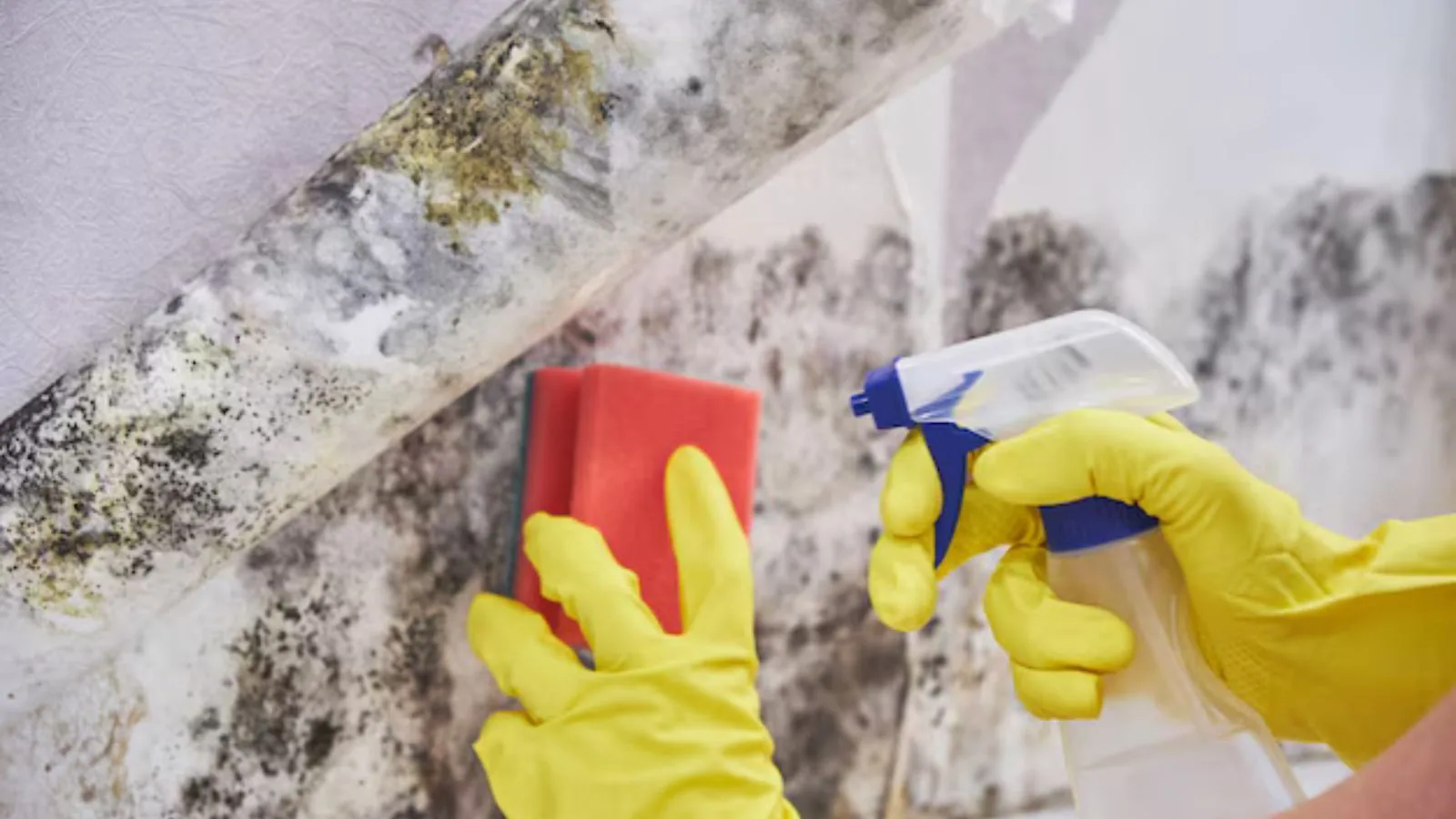
People often ask how soon mold will show up after a leak. The honest answer is that it depends on how wet the materials stay. The EPA says it is important to dry water-damaged areas and items within 24 to 48 hours to prevent mold growth, and that in most cases mold will not grow when materials are dried in that window.
That gives a clear job. Remove the water, dry the structure and measure it. This guide explains the timeline and the signs that something was missed.
The first 48 hours
Mold needs moisture, a food source such as drywall paper or wood, and time. Water damage supplies the first two. In the first two days, the main goal is to get liquid out and start drying. A wet carpet pad, a damp wall cavity and a wet cabinet base are the places where moisture hides.
| Time since the water | What is happening | What to do |
|---|---|---|
| 0 to 24 hours | Water wicks into drywall and pad | Stop the source, extract, start drying |
| 24 to 48 hours | Window to dry materials to prevent growth | Air movers, dehumidifiers, moisture readings |
| 3 to 5 days | Odor and visible growth may appear on wet materials | Inspect, remove materials that cannot be dried |
| A week or more | Growth can spread through porous materials | Assessment and remediation plan |
Signs that moisture was left behind
- A musty smell that returns when the weather is humid.
- Paint that bubbles or wallpaper that peels.
- Dark spots near baseboards, ceiling corners or inside closets.
- Warped flooring or a soft spot under carpet.
None of these confirms mold on its own, but each one means something is still damp. A moisture meter and thermal camera can find it, and structural drying explains how readings guide the work.
Water damage a few days ago? Call and ask about a moisture check.
☎ Call (833) 521-1033What to do if you already see growth
Stay out of the affected area as much as possible, keep fans off and do not disturb it. A small area of about 10 square feet or less can often be handled by the owner on hard surfaces, according to the EPA. Larger growth, growth on porous materials and growth after contaminated water call for a professional. Mold remediation explains containment, removal and drying.
Questions about health belong with a physician. We do not diagnose or give medical advice.
What affects how fast mold appears
The 24 to 48 hour guidance from the EPA is a general benchmark. In practice, several conditions shorten or lengthen the window. A warm, closed room with wet carpet pad can turn faster than a cool, ventilated space with a wet hard floor. Water that is contaminated brings more organic material with it, which speeds problems along. A material that is both wet and hard to dry, such as insulation inside a closed wall cavity, is a common place for trouble.
| Condition | Effect on risk | Why |
|---|---|---|
| Warm room | Raises risk | Warmth supports growth |
| Closed-up room with no airflow | Raises risk | Moisture lingers |
| Porous materials such as drywall and pad | Raises risk | They hold water and feed growth |
| Hard surfaces such as tile and sealed concrete | Lowers risk | They dry faster and are easier to clean |
| Prompt extraction and drying | Lowers risk | Removes the moisture mold needs |
How a professional checks for what you cannot see
Mold often starts in places you cannot see, such as behind baseboards, under cabinets and inside wall cavities. A restoration crew uses a moisture meter to read materials, a thermal camera to spot temperature differences that suggest moisture, and sometimes a small inspection hole to look inside a wall. These tools let the crew decide where drying is needed and where materials must be opened or removed.
The readings are compared against a dry reference for similar materials in the same building. That is why a crew often takes readings in an unaffected room too. Without a reference, a number alone does not tell you whether a wall is wet or simply normal.
Deciding between drying and remediation
If the structure was dried promptly and readings reached the goal, mold is unlikely and no special treatment is usually needed. If materials stayed wet for several days, if you see growth or if a musty odor persists after drying, the job changes. Remediation under ANSI/IICRC S520 practice involves setting up containment, removing affected porous materials, cleaning surfaces and verifying the result.
- Assess: find where moisture and growth are.
- Contain: isolate the area so spores do not spread through the house.
- Remove: take out materials that cannot be cleaned.
- Clean and dry: treat remaining surfaces and bring the area to the drying goal.
- Verify: check that the readings and the space meet the plan.
Testing can be part of this, though it is not always necessary. If a lender, landlord or insurer asks for it, a qualified tester can do it separately from the crew doing the work, which many people prefer so that the same company is not checking its own work.
If you are a renter or a condo owner
Mold after a leak in a multi-unit building can be shared with neighbors. Report the problem to the manager or HOA in writing and ask what plan is in place for the common walls and the units above and below. You may not be able to control the work, but you can control your records and your belongings.
Millbrae note
Millbrae mornings can be foggy, and winters are wet, with most rain falling November through April, according to published climate summaries. Those conditions keep outside air humid, so materials that are wet in winter dry more slowly without equipment and may take longer to reach the drying goal.
This matters in tightly built condo buildings around the Millbrae station and in older houses in Downtown Millbrae and Millbrae Highlands. Source type: published climate data and EPA guidance.
Prevention after any leak
Keep indoor humidity below 60 percent, ideally between 30 and 50 percent. Run exhaust fans, fix leaks promptly and ask for moisture readings before new drywall or flooring closes up a wall.
Questions we hear in Millbrae
How fast does mold grow after water damage?
The EPA advises drying within 24 to 48 hours to prevent growth. Materials that stay wet longer are more likely to grow mold.
Will mold always appear after a leak?
No. Prompt drying prevents it in most cases. It depends on how long and how wet.
Can I tell mold by smell alone?
A musty smell suggests moisture and possible growth, but an assessment confirms it.
Is mold after water damage covered by insurance?
It varies by policy and cause. Ask your insurer before work begins.
Is foggy Millbrae weather a problem for drying?
Humid outside air can slow natural drying, so equipment and readings matter more.