
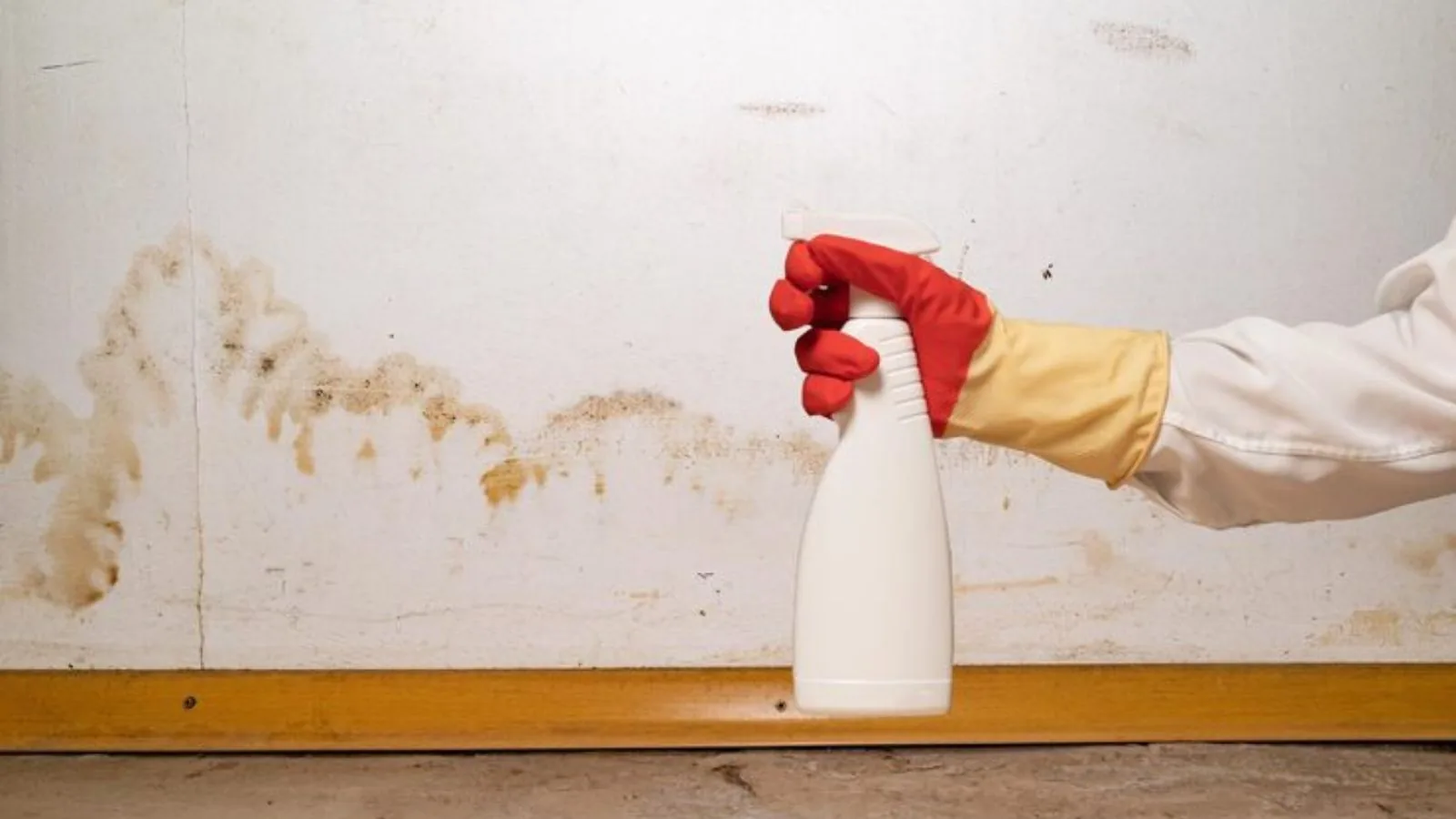
Mold on a basement wall is usually a moisture problem first and a cleaning problem second. If you clean the surface and leave the moisture, the growth returns. This guide covers what you can do on a small, hard surface and when the wall itself is the issue.
We are not doctors and cannot say what mold does to anyone health-wise. If you have symptoms or concerns, talk to a physician before starting.
Check the size and the surface
The EPA says mold areas of about 10 square feet or less can usually be handled by the owner, and that professionals are advised when growth covers more than 10 square feet, when water damage is significant or when the water was contaminated. Surface matters too. Painted concrete and block are hard surfaces, while drywall, paneling and insulation are porous.
| Surface | Small patch | Larger or recurring growth |
|---|---|---|
| Painted concrete or block | Owner cleaning is possible | Moisture source and remediation plan |
| Drywall | Often needs cutting out | Professional removal |
| Wood framing | Cleaning and drying | Remediation if deep |
| Insulation or carpet | Usually removed | Professional removal |
What owner cleaning involves
On a small, hard surface, people use detergent and water, scrub and dry the area fully, and wear gloves, eye protection and a mask. Do not mix cleaning products, and ventilate. Drying matters more than the cleaner, because moisture is what lets growth return.
Do not paint over mold, and do not scrub drywall that is soft. If the wall is damp when you press it, the cause is still active, and you should dry the area before anything else. See structural drying and dehumidification for how moisture is measured.
Mold on more than a small patch? Call and describe where it is.
☎ Call (833) 521-1033When the wall is the problem
If the growth is on drywall, behind paneling, along a bottom plate or spreading, the wall has been wet for a while. Remediation then involves containment, removal of affected materials and drying under ANSI/IICRC S520 practice. A crew can explain scope on the call. Mold remediation covers that process.
Safety before cleaning
Cleaning mold stirs up spores, so the preparation matters as much as the scrubbing. The EPA guidance for small mold jobs suggests protective gloves, eye protection and a respirator or mask rated for the task, and it says people with allergies, asthma or other health conditions should consider having someone else do the work. We are not able to advise on health. Ask a physician if you have a condition that could be affected.
- Fix the water problem first, or the cleaning will not last.
- Open a window or use a fan that vents outside, if conditions allow.
- Wear gloves, goggles and a mask suitable for dust and spores.
- Keep the area contained by closing doors and covering vents with plastic where practical.
- Clean hard surfaces with detergent and water, then dry completely.
- Bag removed porous materials in plastic before carrying them out.
Never mix cleaning products, especially bleach and ammonia, because the fumes can be dangerous. Do not dry brush a moldy surface, since that releases more spores into the air.
Reading what the wall is telling you
Mold on a wall is a symptom. The pattern of the growth can give you a clue about the cause, and the cause decides the fix.
| What you see | Likely moisture story | What to check |
|---|---|---|
| Growth along the bottom of the wall | Water from the floor, wicking or seepage | Floor drains, slab cracks, gutters and grading |
| Growth in a corner on an outside wall | Condensation on a cold surface | Insulation and ventilation |
| Growth around a pipe or fixture | Leak or sweating pipe | Supply lines and drain fittings |
| White crust with dampness | Water moving through masonry | Exterior drainage |
| Widespread musty odor, no visible growth | Hidden moisture or a closed-up humid space | Humidity reading and moisture meter |
If the stain is near the floor and the floor itself is damp, there may be a water entry point that cleaning will not touch. If the stain follows a pipe, a plumber should check it. Each of these needs a different repair, so take a moment to look before scrubbing.
What not to do
- Do not paint or seal over mold. Paint can peel and trap moisture behind it.
- Do not run a fan across the growth, which spreads spores.
- Do not use a pressure washer indoors.
- Do not keep stored items against a damp wall.
- Do not assume a bleach wipe has solved a porous wall.
Keep a record of what you did and what the wall looked like before and after, with dates. If the growth returns within weeks, the moisture source has not been solved, and it is time to bring in a professional to measure the wall and the room. Remediation crews work to ANSI/IICRC S520 practice, which describes containment, removal and verification, and they can tell you whether the wall needs to be opened.
Millbrae note
We do not have a source that says how common basements are in Millbrae, so this guide applies to any lower level, garage-level room or below-grade closet. Published climate summaries show the wet season running November through April, with the hills getting noticeably more rain than the flats, and that is when lower-level walls are most likely to stay damp.
Check walls in Millbrae Highlands or Millbrae Meadows homes with a hillside lot for seepage after the first big storm. Source type: federal environmental agency guidance and published climate data.
After cleaning
Keep indoor humidity below 60 percent, ideally between 30 and 50 percent, as the EPA suggests. Fix the leak, redirect gutters and downspouts and check the wall in a few weeks. A recurring stain means the moisture source is still there.
Questions we hear in Millbrae
Can I use bleach on basement mold?
It does not take care of mold inside porous materials, and it is not a substitute for finding the moisture. Ask before you start.
How big is too big to clean myself?
The EPA says about 10 square feet or less is usually manageable by the owner, and larger areas call for a professional.
Why does mold keep coming back on the same wall?
Moisture is still reaching it, from a leak, condensation or seepage. Fix the source and dry the wall.
Do you test for mold?
Testing is done by a qualified tester. We explain the process and handle remediation.
Which Millbrae homes should check basement walls first?
Any home with a lower level, a garage-level room or a hillside lot is worth checking after the first heavy rain of the season.