
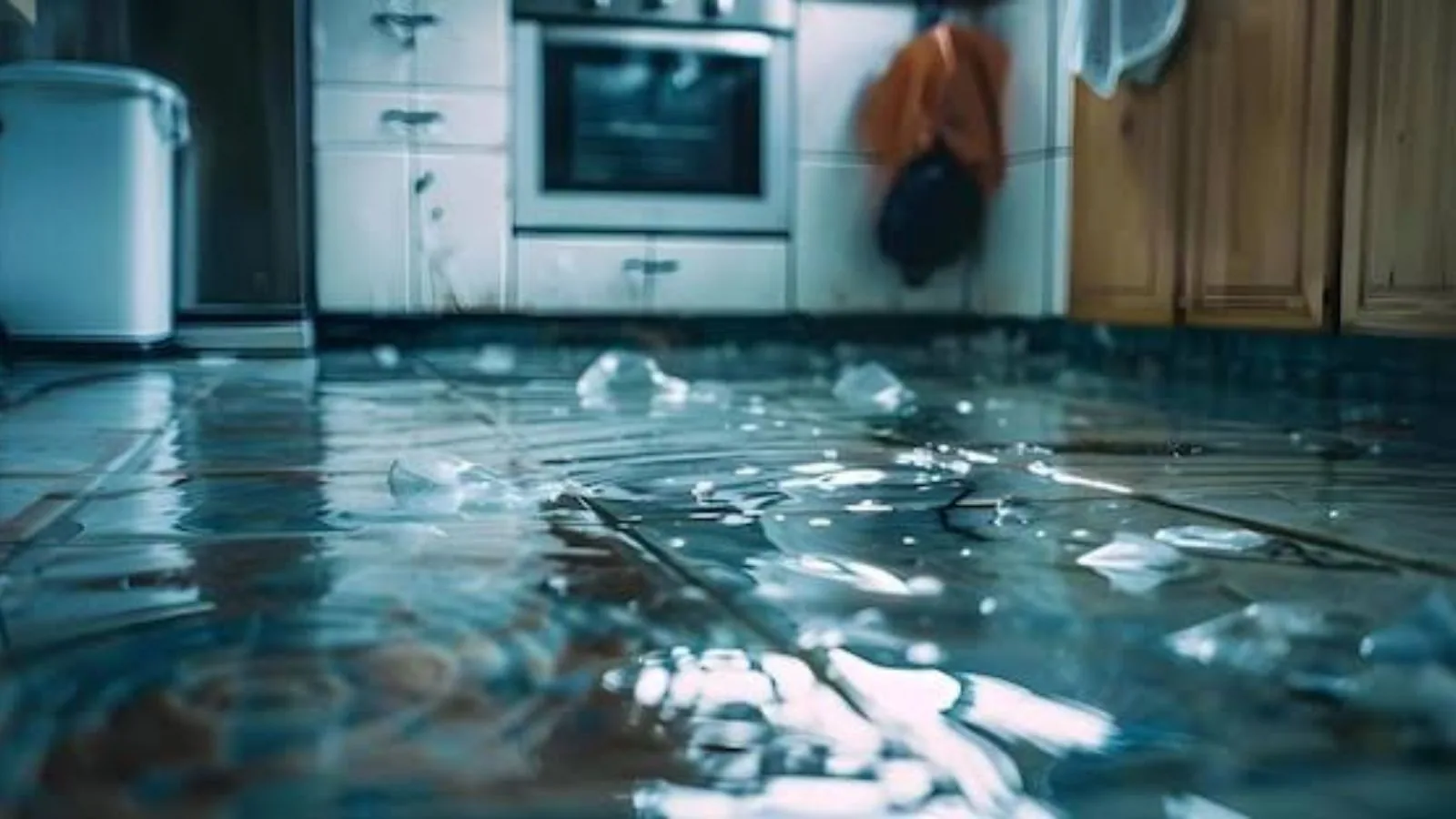
Water mitigation is the set of steps taken to stop damage from getting worse after water gets into a building. It is the emergency phase. Mitigation comes before repair, and it is the part of a job that decides whether a wet floor stays a wet floor or becomes mold, odor and a bigger bill.
Many people hear the word for the first time on an estimate or in a call with their insurer. This guide explains what it covers, what it does not and how it fits the rest of the job.
The four parts of mitigation
- Stop the source. Close a valve, shut off a supply line or cover a roof opening.
- Remove the water. Pumps, extraction wands and truck-mounted units take out the bulk.
- Dry the structure. Air movers and dehumidifiers pull moisture out of materials until readings reach the drying goal.
- Protect what is left. Move or pack out contents, treat surfaces and document the loss.
Only the first part is something most owners can do themselves. The rest needs equipment and measurement. The details of extraction are on the water extraction page, and the drying phase is explained in structural drying and dehumidification.
Why the first 72 hours matter
Water keeps moving after you stop seeing it. In the first day it wicks into drywall, baseboards and the pad under carpet. By the second or third day odors start, and the risk of mold grows. The EPA advises drying water-damaged areas and items within 24 to 48 hours to prevent mold growth, so early mitigation is the part you control.
That is also why a quick call matters more than the cause. You do not need to know whether the leak is covered, who is at fault or what the repair will be before the water is stopped and removed.
| Phase | What it means | Who usually does it |
|---|---|---|
| Mitigation | Stop source, remove water, dry the structure | Restoration crew |
| Repair | Replace drywall, flooring, paint | Builder or flooring contractor |
| Plumbing or roof fix | Repair the source | Licensed plumber or roofer |
| Claim handling | Adjuster review and payment | Your insurer |
Water just got in? Call the 24/7 line and we will explain the first steps.
☎ Call (833) 521-1033What mitigation does not include
Mitigation is not a rebuild. It does not install new flooring, replace cabinets or repaint walls. It is also not plumbing repair or roof repair, and it is not waterproofing. A restoration company may do both phases, or only the first, and you should ask which on the call.
It is also worth asking what readings will be recorded. Moisture logs and photos show that the structure was dried and are useful for an insurance claim.
A realistic first day, hour by hour
It helps to picture how a mitigation job unfolds, because the word sounds abstract until you see the sequence. A supply line fails under a kitchen sink at night. By the time you notice, water has spread across the floor and is moving toward the dining room.
- In the first few minutes you close the shutoff valve under the sink or the main shutoff for the house, and you switch off power to any room where water is near outlets, if you can do that safely.
- Within the first hour you call a restoration company, photograph the room and lift small items off the floor.
- When the crew arrives, they check the water source, test materials with a moisture meter and decide which materials can be dried and which cannot.
- Extraction comes next. Standing water is pumped or vacuumed up, because liquid left in place keeps feeding moisture into the structure.
- Air movers and dehumidifiers go in. The crew places them according to the room layout and the readings, not at random.
- Over the following days the crew returns to read the meters again, adjust the equipment and confirm the materials have reached the drying goal.
Notice how much of this is measurement. A wet floor can look dry on the surface while the subfloor underneath stays damp. Readings are the only way to know, which is why a reputable company talks about moisture logs and not only about fans.
Which materials can be dried and which cannot
Not everything wet can be recovered by drying, and that is a normal part of mitigation, not a sign of a problem. The general idea in ANSI/IICRC S500 practice is that clean water on solid materials such as framing, concrete and many hard floors can usually be dried in place. Porous materials such as carpet pad, insulation and some drywall are often removed, especially when the water was contaminated or has been present for a long time.
| Material | Often dried in place | Often removed |
|---|---|---|
| Wood framing | Yes, when clean water | If rotted or contaminated |
| Concrete slab | Yes | Rarely |
| Drywall | Sometimes, when caught early | If soaked, swollen or contaminated |
| Carpet pad | Rarely | Usually |
| Insulation | Rarely | Usually when wet |
| Hardwood floor | Sometimes with specialized drying | If cupped badly or contaminated |
This is why a mitigation estimate sometimes includes demolition. Removing a wet section lets the cavity behind it dry, and it prevents hidden moisture from sitting inside a wall. The flip side is that a good crew explains why each piece is coming out and shows you the reading that supports it.
Common mistakes in the first day
- Waiting to see whether the area dries on its own. Surface dryness can hide wet framing and subfloor.
- Using household fans alone. They move air but do not remove moisture from the air the way a dehumidifier does.
- Turning the heat up very high. Warm, humid air can make some materials worse without proper dehumidification.
- Walking on wet carpet and spreading dirt or contaminants.
- Throwing out damaged items before photographing them, which can complicate a claim.
None of these mistakes is a disaster, but each one costs time. If you are unsure, the simplest rule is to stop the source, remove standing water you can safely reach and call for a moisture check.
Millbrae note
Millbrae gets all of its water from the San Francisco regional water system, delivered through the city, according to the Bay Area Water Supply and Conservation Agency profile of the city. That means a failed supply line keeps flowing at full city pressure until someone closes the valve, so knowing where your main shut-off is can matter more than any other piece of mitigation knowledge.
Homeowners in the Millbrae Meadows and Green Hills areas can ask the city utility where the meter and street shut-off are before a leak happens. Source type: regional water agency profile.
How mitigation connects to your insurance
Most policies expect you to take reasonable steps to protect the property after a loss. The California Department of Insurance says to protect the property, keep receipts and avoid major permanent repairs until the adjuster has inspected. Mitigation records back that up.
Questions we hear in Millbrae
What is water mitigation in simple terms?
It is the emergency work that stops water damage from spreading, including stopping the source, removing water and drying the structure.
Is mitigation the same as restoration?
Mitigation is the first phase. Restoration often includes both mitigation and the repairs that follow, and some companies only do one.
How soon should mitigation start?
As soon as the source is stopped. The EPA advises drying water-damaged areas and items within 24 to 48 hours to prevent mold.
Can I do mitigation myself?
You can stop the source and mop up a small, clean spill. Anything that reached walls, pad or framing needs equipment and measurement.
Who do I call in Millbrae to shut off water at the street?
Millbrae owns and operates its water utility, so ask the City of Millbrae about the meter and street valve. Inside the house, find your main shut-off before you need it.